


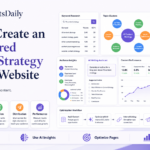
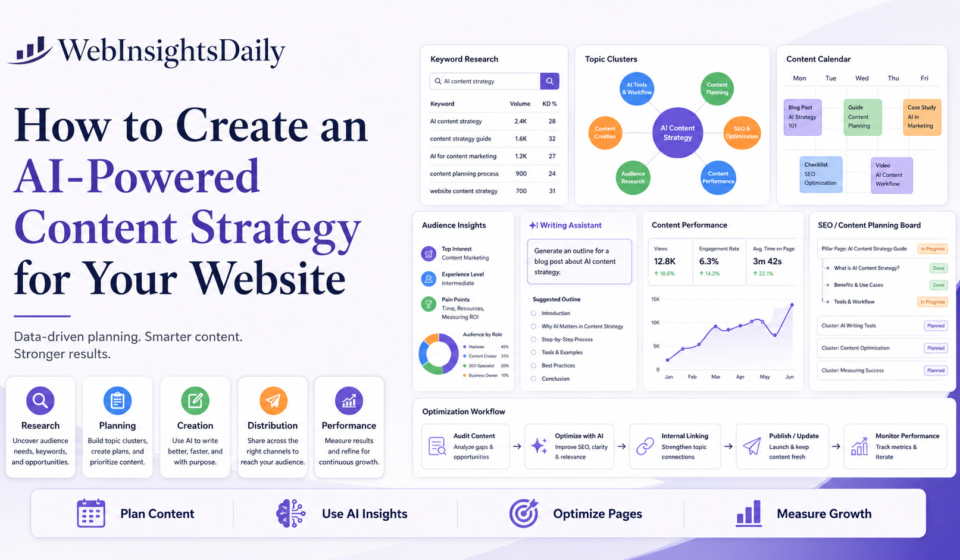
How to Create an AI-Powered Content Strategy for Your Website
Content marketing has become one of the most important ways for businesses to attract customers, build authority, and improve online visibility.
However, creating successful content requires more than publishing articles regularly. Businesses need a strategic approach that includes research, audience understanding, SEO optimization, content planning, and continuous improvement.
Artificial intelligence is changing how companies approach content marketing.
An AI-powered content strategy combines human expertise with artificial intelligence to create better content, understand audiences, automate workflows, and improve search performance.
In 2026, businesses that use AI effectively can create more relevant content while saving time and resources.
What Is an AI-Powered Content Strategy?
An AI-powered content strategy uses artificial intelligence tools to support different stages of content marketing.
AI can help with:
- Topic research
- Keyword analysis
- Audience research
- Content planning
- Writing assistance
- SEO optimization
- Performance analysis
The goal is not to replace content creators but to help them make better decisions and work more efficiently.
Why Businesses Need AI Content Strategies
1. Content Competition Is Increasing
Millions of articles are published every day.
Businesses need content that is:
- More useful
- More original
- Better researched
- More relevant to users
AI helps identify opportunities and create stronger content plans.
2. Search Behavior Is Changing
Users are increasingly asking detailed questions through:
- Search engines
- AI assistants
- Voice search
Content strategies must focus on answering real user needs rather than only targeting keywords.
3. AI Improves Content Efficiency
Traditional content creation requires significant time for:
- Research
- Planning
- Drafting
- Editing
- Optimization
AI tools can accelerate these processes.
Steps to Create an AI-Powered Content Strategy
Step 1: Define Your Content Goals
Before using AI tools, define what you want to achieve.
Common goals include:
- Increase organic traffic
- Generate leads
- Build brand authority
- Improve customer education
- Increase conversions
A clear goal helps determine the right content approach.
Step 2: Understand Your Audience
Successful content starts with understanding your target audience.
AI tools can help analyze:
- Customer questions
- Search behavior
- Online discussions
- Market trends
Important questions:
- What problems does your audience have?
- What information are they searching for?
- What solutions do they need?
Step 3: Use AI for Topic Research
AI can help identify valuable content opportunities.
Research areas include:
- Trending topics
- Competitor content gaps
- Related questions
- Emerging industry trends
Example:
Instead of writing:
“AI tools”
Create a more specific topic:
“How AI tools help small businesses automate marketing tasks”
Specific topics usually match user intent better.
Step 4: Perform AI-Assisted Keyword Research
Keywords remain important, but modern SEO requires understanding search intent.
AI tools can help identify:
- Primary keywords
- Related terms
- Long-tail keywords
- User questions
- Content gaps
A strong keyword strategy should focus on:
User Intent + Topic Authority + Content Quality
Step 5: Build Content Clusters
Search engines increasingly understand topics rather than individual keywords.
A content cluster includes:
Pillar Content
A comprehensive guide covering a broad topic.
Example:
“Complete Guide to AI Marketing”
Supporting Content
Detailed articles covering specific areas.
Examples:
- AI marketing tools
- AI advertising automation
- AI content creation
- AI customer analytics
This structure helps build topical authority.
Step 6: Use AI for Content Creation Assistance
AI can support writers with:
- Article outlines
- Research summaries
- Content ideas
- First drafts
- Editing suggestions
However, high-quality content still requires:
- Human expertise
- Original insights
- Real examples
- Fact checking
The best approach is:
AI Efficiency + Human Experience = Better Content
Step 7: Optimize Content for SEO and AI Search
Modern content should be optimized for both traditional search engines and AI-powered search.
Important optimization areas:
Clear Structure
Use:
- Proper headings
- Tables
- Lists
- FAQs
Strong E-E-A-T Signals
Include:
- Author expertise
- Expert opinions
- Real examples
- Trust information
Entity Optimization
Clearly mention relevant:
- People
- Companies
- Products
- Concepts
Helpful Answers
Provide direct responses to user questions.
Step 8: Use AI for Content Updates
Content should not remain unchanged forever.
AI can help identify:
- Outdated information
- Missing topics
- Competitor improvements
- New search opportunities
Regular updates help maintain relevance.
Step 9: Analyze Content Performance
AI analytics tools can help measure:
- Traffic performance
- User engagement
- Conversion rates
- Ranking changes
Businesses can use these insights to improve future content.
AI Tools That Support Content Strategy
AI Writing Tools
Useful for:
- Drafting
- Editing
- Brainstorming
AI SEO Tools
Useful for:
- Keyword research
- Content optimization
- Competitor analysis
AI Analytics Tools
Useful for:
- Performance tracking
- User behavior analysis
AI Automation Tools
Useful for:
- Workflow management
- Content scheduling
Benefits of an AI-Powered Content Strategy
Faster Content Production
AI reduces time spent on research and planning.
Better Content Decisions
AI provides insights based on data.
Improved SEO Performance
AI helps identify optimization opportunities.
Consistent Publishing
Automation helps maintain content schedules.
Better User Experience
Content becomes more relevant and helpful.
Challenges of AI Content Strategy
Maintaining Originality
Many businesses use AI tools, making unique perspectives more important.
Content Quality Control
AI-generated information requires human review.
Brand Voice
AI content should be edited to match brand personality.
Ethical Use
Businesses should use AI responsibly and transparently.
Future of AI Content Marketing
The future of content marketing will involve more intelligent automation.
AI systems may help businesses:
- Predict trending topics
- Create personalized content experiences
- Optimize content automatically
- Manage complete content workflows
However, human creativity, expertise, and storytelling will remain essential.
Frequently Asked Questions
What is an AI-powered content strategy?
An AI-powered content strategy uses artificial intelligence tools to improve research, planning, creation, optimization, and analysis of website content.
Can AI create a complete content strategy?
AI can assist with planning and recommendations, but human expertise is needed for final strategy decisions.
Does AI-generated content rank on Google?
AI-generated content can rank if it provides helpful, accurate, original information that satisfies users.
How does AI improve SEO content?
AI helps with keyword research, topic analysis, optimization suggestions, and performance insights.
Conclusion
AI-powered content strategies are changing how businesses create and manage digital content.
By combining artificial intelligence with human expertise, companies can produce more valuable content, improve SEO performance, and better understand their audiences.
The future of content marketing will not be about creating more content. It will be about creating smarter, more useful, and more trustworthy content.