





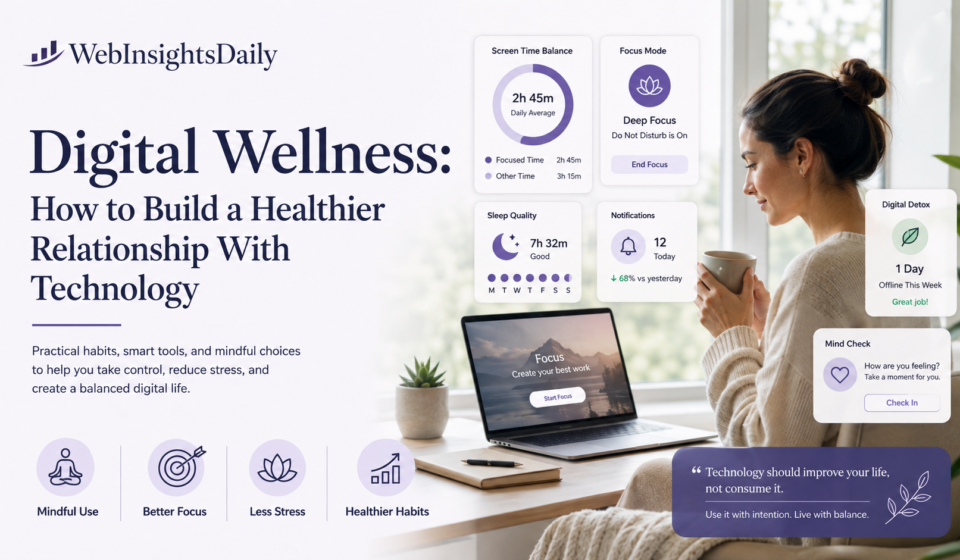
Digital Wellness: How to Build a Healthier Relationship With Technology
Technology has become an essential part of modern life.
People use smartphones, computers, social media, and digital platforms for work, education, communication, entertainment, and personal growth.
While technology provides countless benefits, excessive digital use can create challenges such as reduced focus, stress, poor sleep, and difficulty disconnecting.
This is where digital wellness becomes important.
Digital wellness focuses on creating a balanced and healthy relationship with technology. It is not about completely avoiding digital devices but about using them intentionally to improve quality of life.
In 2026, as artificial intelligence and connected technologies become more integrated into daily routines, learning how to maintain digital balance is becoming increasingly important.
What Is Digital Wellness?
Digital wellness refers to the practice of using technology in a way that supports physical health, mental wellbeing, productivity, and meaningful connections.
It focuses on:
- Healthy screen habits
- Responsible technology use
- Online safety
- Digital productivity
- Maintaining balance between online and offline life
The goal is not less technology but better technology use.
Why Digital Wellness Matters
1. Technology Use Is Increasing
People spend more time connected through:
- Smartphones
- Social media platforms
- Streaming services
- Online meetings
- Digital tools
Technology has improved convenience, but constant connectivity can affect daily habits if not managed properly.
2. Digital Habits Affect Mental Wellbeing
Excessive technology use may contribute to:
- Information overload
- Reduced attention span
- Stress from constant notifications
- Difficulty relaxing
Developing healthy digital habits helps people use technology more intentionally.
3. Better Balance Improves Productivity
Constant interruptions can reduce focus.
Digital wellness encourages:
- Focused work periods
- Fewer distractions
- Better time management
Signs You May Need Better Digital Balance
Some common signs include:
- Checking your phone constantly
- Feeling distracted during important tasks
- Spending more time online than planned
- Difficulty disconnecting from work
- Using devices before sleep
- Feeling overwhelmed by notifications
Recognizing these patterns is the first step toward improving digital habits.
How to Build a Healthier Relationship With Technology
1. Set Clear Screen Time Boundaries
One of the simplest digital wellness practices is creating limits.
Examples:
- Avoid unnecessary phone use during meals
- Set specific times for social media
- Take regular breaks from screens
- Create device-free periods
The goal is to control technology use instead of allowing technology to control your attention.
2. Practice Mindful Technology Use
Before opening an app or checking a device, ask:
- Why am I using this?
- Does this activity add value?
- Is this the best use of my time?
Mindful technology use helps reduce unnecessary digital habits.
3. Manage Notifications
Notifications are designed to capture attention.
Too many alerts can interrupt concentration.
Improve focus by:
- Turning off unnecessary notifications
- Using silent modes
- Keeping important alerts only
4. Create Digital-Free Spaces
Design areas where technology is limited.
Examples:
- Dining areas
- Bedrooms
- Family spaces
Digital-free zones encourage better conversations and relaxation.
5. Improve Sleep Habits
Technology can affect sleep quality when used excessively before bedtime.
Better habits include:
- Reducing screen use before sleeping
- Avoiding stressful content at night
- Using night mode features
- Keeping devices away from the bed
6. Use Technology to Improve Wellness
Technology itself is not the problem.
The right tools can support wellbeing.
Examples:
- Fitness tracking apps
- Meditation applications
- Sleep monitoring devices
- Productivity tools
- Digital learning platforms
The focus should be using technology intentionally.
Digital Wellness in the Workplace
Modern workplaces depend heavily on digital tools.
Employees can improve digital wellness by:
Managing Communication
Avoid unnecessary meetings and messages.
Creating Focus Time
Use uninterrupted work periods for important tasks.
Maintaining Work-Life Boundaries
Avoid being constantly available outside working hours.
Digital Wellness for Children and Families
Technology plays an important role in children’s education and entertainment.
Healthy family technology habits include:
- Setting age-appropriate limits
- Encouraging offline activities
- Discussing online safety
- Creating shared technology rules
The goal is teaching responsible technology use.
Role of AI in Digital Wellness
Artificial intelligence is becoming part of digital wellbeing solutions.
AI can help users:
- Monitor digital habits
- Identify unhealthy usage patterns
- Suggest productivity improvements
- Personalize wellness recommendations
Future AI assistants may help people create healthier technology routines automatically.
Benefits of Digital Wellness
Better Mental Focus
Reducing distractions improves concentration.
Improved Sleep Quality
Healthy technology habits support better rest.
More Meaningful Relationships
Less device dependence encourages real-world connections.
Increased Productivity
Intentional technology use improves efficiency.
Greater Control
Users become more aware of how technology affects their lives.
Challenges in Achieving Digital Wellness
Digital Addiction
Some platforms are designed to encourage continuous engagement.
Work Expectations
Remote work and digital communication can make disconnecting difficult.
Social Pressure
People may feel pressure to stay constantly updated online.
Lack of Awareness
Many people do not realize how digital habits affect wellbeing.
Future of Digital Wellness
As technology becomes more advanced, digital wellness will become an important part of everyday life.
Future trends may include:
- AI-powered wellbeing assistants
- Smarter screen-time management
- Personalized digital health recommendations
- More privacy-focused technology
- Healthier social media experiences
The future will focus on creating technology that improves life without overwhelming users.
Frequently Asked Questions
What is digital wellness?
Digital wellness means using technology in a balanced and healthy way that supports physical and mental wellbeing.
How can I improve my digital wellness?
You can improve digital wellness by managing screen time, reducing unnecessary notifications, creating device-free moments, and using technology intentionally.
Is technology harmful for mental health?
Technology itself is not harmful, but excessive or unhealthy use can negatively affect wellbeing.
Can AI help with digital wellness?
Yes. AI can analyze digital habits and provide personalized recommendations for healthier technology use.
Conclusion
Digital wellness is becoming essential in a world where technology is part of almost every aspect of life.
The goal is not to disconnect completely but to create a healthier relationship with digital tools.
By practicing mindful technology use, setting boundaries, and using digital solutions wisely, people can enjoy the benefits of technology while protecting their wellbeing.
A balanced digital lifestyle allows technology to become a tool for improvement rather than a source of distraction.