

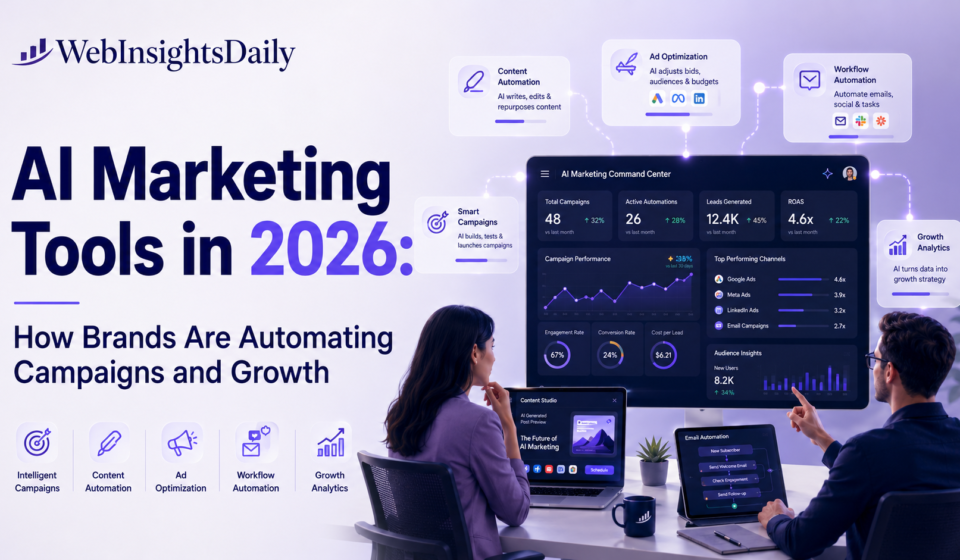
AI Marketing Tools in 2026: How Brands Are Automating Campaigns and Growth
Marketing has always evolved with technology. From traditional advertising to search engines, social media, and automation platforms, every major technological shift has changed how brands attract and engage customers.
In 2026, artificial intelligence is becoming one of the most influential technologies in marketing.
AI marketing tools are helping businesses automate repetitive tasks, analyze customer behavior, create personalized experiences, and improve campaign performance.
Instead of spending hours manually collecting data, writing content, or optimizing campaigns, marketers can now use AI-powered platforms to make faster and smarter decisions.
The future of marketing is not about replacing human creativity. It is about combining human strategy with AI-powered efficiency.
What Are AI Marketing Tools?
AI marketing tools are software platforms that use artificial intelligence to improve different areas of marketing.
These tools can help businesses with:
- Content creation
- Customer analysis
- Search optimization
- Advertising automation
- Email marketing
- Social media management
- Sales forecasting
- Campaign optimization
Unlike traditional marketing software, AI tools can analyze patterns, learn from data, and provide intelligent recommendations.
Why Are Businesses Adopting AI Marketing Tools?
1. Faster Marketing Execution
Marketing teams often manage multiple activities at the same time:
- Content planning
- Social media campaigns
- Advertising
- Customer communication
- Performance reporting
AI tools reduce manual effort by automating repetitive tasks.
For example, an AI platform can help create campaign ideas, generate content drafts, analyze results, and suggest improvements.
2. Better Customer Understanding
Modern customers expect personalized experiences.
AI marketing tools analyze:
- Browsing behavior
- Purchase history
- Customer interactions
- Search patterns
- Engagement data
This allows businesses to understand customer needs and deliver more relevant messages.
3. Improved Marketing ROI
Businesses invest heavily in marketing campaigns.
AI helps improve return on investment by:
- Identifying high-performing channels
- Optimizing advertising budgets
- Predicting customer behavior
- Reducing wasted spending
Types of AI Marketing Tools
1. AI Content Creation Tools
Content creation is one of the most popular uses of AI in marketing.
AI content tools can assist with:
- Blog writing
- Social media posts
- Email campaigns
- Product descriptions
- Video scripts
However, marketers should review AI-generated content to ensure accuracy, originality, and brand consistency.
2. AI SEO Tools
SEO is becoming more data-driven with AI.
AI SEO tools can help with:
- Keyword research
- Competitor analysis
- Content optimization
- Search intent analysis
- Website audits
Modern SEO is moving beyond keyword placement and focusing on understanding user needs and providing valuable information.
3. AI Advertising Platforms
Paid advertising requires constant monitoring and optimization.
AI-powered advertising tools can:
- Adjust bidding strategies
- Identify valuable audiences
- Optimize ad creatives
- Predict campaign performance
This helps businesses improve advertising efficiency.
4. AI Email Marketing Tools
Email marketing remains one of the most effective digital channels.
AI improves email campaigns through:
- Personalized recommendations
- Automated segmentation
- Smart send times
- Subject line optimization
Businesses can send more relevant messages without manually managing every campaign.
5. AI Customer Support Tools
AI customer support platforms help businesses provide faster responses.
They can:
- Answer common questions
- Categorize customer requests
- Provide product recommendations
- Support customer service teams
AI support systems improve response times while allowing human agents to handle complex issues.
Popular AI Marketing Use Cases
AI-Powered Content Strategy
Marketing teams can use AI to:
- Research trending topics
- Analyze competitors
- Create content outlines
- Identify audience interests
This helps create more effective content strategies.
Personalized Customer Experiences
AI allows businesses to deliver different experiences to different users.
Examples:
- Personalized product recommendations
- Customized website content
- Targeted advertisements
- Individual email offers
Social Media Automation
AI tools can support social media teams by helping with:
- Content scheduling
- Caption generation
- Audience analysis
- Trend monitoring
This allows brands to maintain consistent online activity.
Benefits of AI Marketing Tools
Increased Productivity
AI reduces the time required for research, content creation, and reporting.
Better Decision Making
AI provides insights based on customer data and campaign performance.
Improved Personalization
Businesses can create more relevant customer experiences.
Cost Efficiency
Automation reduces manual workload and improves resource allocation.
Scalability
Companies can manage larger marketing operations without increasing workload significantly.
Challenges of Using AI Marketing Tools
Maintaining Brand Voice
AI-generated content may require editing to match a company’s unique style.
Data Privacy Concerns
Businesses must handle customer data responsibly.
Lack of Human Creativity
AI can generate ideas, but human creativity remains important for storytelling and strategy.
Accuracy Issues
AI recommendations should be reviewed before making important decisions.
How Businesses Can Successfully Implement AI Marketing
Start With Clear Goals
Companies should identify specific problems they want AI to solve.
Examples:
- Improve content production
- Reduce advertising costs
- Increase conversions
Combine AI With Human Expertise
The best results come from collaboration:
AI provides speed and analysis
Humans provide creativity and strategy
Train Marketing Teams
Employees should understand:
- How AI tools work
- Where AI can help
- How to evaluate AI outputs
Measure Results
Businesses should track:
- Conversion rates
- Customer engagement
- Marketing costs
- Revenue impact
Future of AI Marketing Tools
AI marketing will continue becoming more intelligent and automated.
Future AI marketing systems may:
- Create complete campaigns automatically
- Predict customer needs before they act
- Manage multiple marketing channels
- Provide real-time optimization
AI agents will also play a larger role by managing complete marketing workflows.
Frequently Asked Questions
What are AI marketing tools?
AI marketing tools are software platforms that use artificial intelligence to automate and improve marketing activities.
Are AI marketing tools replacing marketers?
No. They are designed to support marketers by improving efficiency and providing better insights.
Which marketing tasks can AI automate?
AI can automate content creation, customer analysis, advertising optimization, email campaigns, and reporting.
Are AI marketing tools useful for small businesses?
Yes. Small businesses can use AI tools to improve marketing efficiency without requiring large teams.
Conclusion
AI marketing tools are transforming how businesses plan, execute, and optimize their digital strategies.
From content creation and SEO to advertising and customer engagement, AI helps brands work faster and make smarter decisions.
The companies that successfully combine AI technology with human creativity will be better positioned to compete in the evolving digital marketing landscape.