


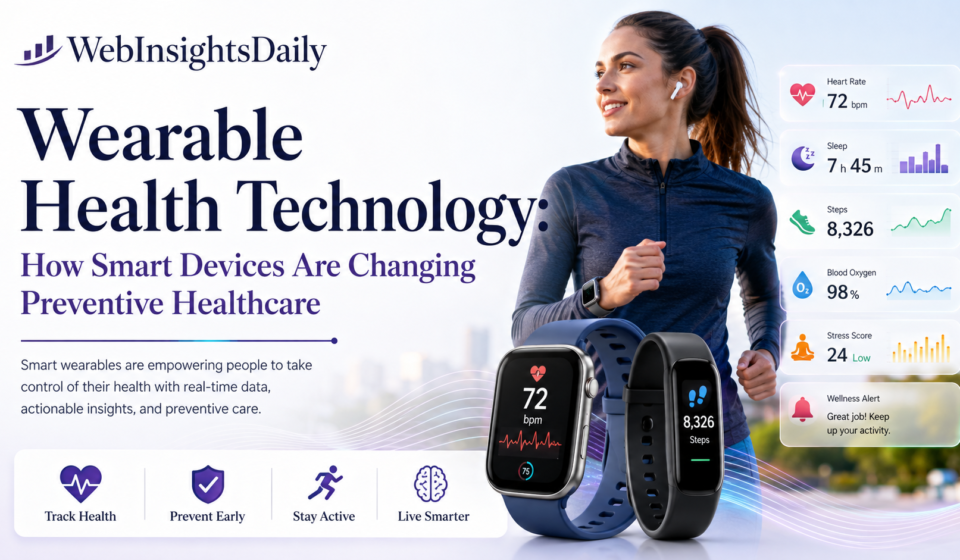
Wearable Health Technology: How Smart Devices Are Changing Preventive Healthcare
Healthcare is moving from reactive treatment toward proactive prevention.
Instead of waiting until health problems become serious, technology is helping people monitor their health continuously and make better lifestyle decisions.
One of the biggest innovations driving this change is wearable health technology.
Smart watches, fitness trackers, smart rings, and medical wearable devices are becoming powerful health monitoring tools. They can track important health information, provide personalized insights, and help users detect potential health concerns earlier.
In 2026, wearable technology is becoming an important part of preventive healthcare by connecting individuals, healthcare providers, and digital health systems.
What Is Wearable Health Technology?
Wearable health technology refers to electronic devices that people can wear to monitor health-related information.
These devices collect data through sensors and provide insights about physical activity, body functions, and overall wellness.
Examples include:
- Smart watches
- Fitness trackers
- Smart rings
- Continuous glucose monitors
- Smart medical patches
- Connected health devices
Unlike traditional medical equipment used only in hospitals, wearable devices allow continuous health monitoring in everyday life.
How Do Wearable Health Devices Work?
Wearable devices use advanced sensors and software to collect health data.
Common technologies include:
| Technology | Purpose |
| Optical Sensors | Monitor heart rate and blood flow |
| Motion Sensors | Track activity and movement |
| GPS | Monitor location and exercise routes |
| AI Algorithms | Analyze health patterns |
| Cloud Systems | Store and process health data |
The process generally works like this:
Sensors Collect Data → AI Analyzes Information → Device Provides Insights → User Takes Action
Why Wearable Health Technology Is Growing
1. Growing Interest in Preventive Healthcare
People are becoming more focused on maintaining health rather than only treating illness.
Wearable devices help users understand:
- Daily activity levels
- Sleep quality
- Fitness progress
- Health patterns
This encourages healthier habits.
2. Increasing Adoption of Smart Devices
Smart watches and fitness trackers have become common consumer devices.
Many people already use wearables for:
- Exercise tracking
- Notifications
- Communication
Healthcare features are making these devices more valuable.
3. Advancement in AI and Sensors
Modern wearables are becoming more accurate because of improvements in:
- Sensor technology
- Artificial intelligence
- Data analysis
AI can identify patterns that may provide useful health insights.
Key Features of Modern Wearable Health Devices
Heart Health Monitoring
Many wearable devices can track:
- Heart rate
- Heart rhythm patterns
- Activity-related changes
This information can help users understand their cardiovascular health.
Sleep Tracking
Sleep plays an important role in overall wellness.
Wearable devices can analyze:
- Sleep duration
- Sleep cycles
- Rest patterns
Users can use these insights to improve sleep habits.
Fitness and Activity Tracking
Wearables help monitor:
- Steps
- Exercise sessions
- Calories burned
- Physical activity levels
This supports healthier lifestyle choices.
Stress and Wellness Monitoring
Some wearable devices estimate stress levels by analyzing:
- Heart rate patterns
- Activity changes
- Sleep quality
These insights encourage users to focus on mental wellness.
Blood Glucose Monitoring
Continuous glucose monitoring devices help track blood sugar levels.
These tools are especially valuable for people who need regular glucose monitoring.
How Wearable Technology Is Transforming Preventive Healthcare
Early Detection of Health Changes
Continuous monitoring allows users and healthcare professionals to identify unusual patterns earlier.
For example:
Changes in heart rate, sleep patterns, or activity levels may indicate that someone should pay closer attention to their health.
Remote Patient Monitoring
Healthcare providers can use wearable data to monitor patients outside traditional healthcare settings.
Benefits include:
- Fewer hospital visits
- Continuous health tracking
- Better chronic disease management
Personalized Health Recommendations
AI-powered wearables can provide personalized suggestions based on individual data.
Examples:
- Exercise recommendations
- Sleep improvement tips
- Activity goals
Benefits of Wearable Health Technology
Improved Health Awareness
Users gain a better understanding of their daily health habits.
Encourages Healthy Behavior
Tracking progress motivates people to maintain healthier routines.
Supports Doctors
Healthcare professionals can access additional information to support patient care.
Continuous Monitoring
Unlike occasional medical checkups, wearables provide ongoing health information.
Convenient Healthcare Access
Users can monitor important health metrics from anywhere.
Challenges of Wearable Health Technology
Data Privacy Concerns
Health information is highly sensitive.
Companies must ensure:
- Secure data storage
- Privacy protection
- Transparent policies
Accuracy Limitations
Consumer wearable devices may not always provide medical-grade accuracy.
Professional medical evaluation remains important.
Information Overload
Continuous health tracking can create too much information for users.
Technology should provide meaningful insights instead of unnecessary complexity.
Dependence on Technology
Wearables should support healthy decisions but should not replace professional medical advice.
Wearable Technology in the Future
The next generation of wearable health devices will become more intelligent and personalized.
Future developments may include:
- Advanced AI health assistants
- More accurate medical sensors
- Real-time disease risk prediction
- Better integration with healthcare systems
- Personalized wellness coaching
Wearables may become an important bridge between everyday health monitoring and professional healthcare.
How Businesses and Healthcare Providers Can Use Wearable Data
Organizations can use wearable health technology for:
Healthcare Research
Analyzing large health datasets to understand trends.
Patient Care
Supporting personalized treatment plans.
Corporate Wellness Programs
Helping employees improve health habits.
Preventive Health Services
Encouraging early action before health problems become severe.
Frequently Asked Questions
What is wearable health technology?
Wearable health technology includes smart devices that monitor health information such as heart rate, activity, sleep, and other wellness indicators.
Can wearable devices detect diseases?
Some wearable devices can identify health patterns that may require attention, but medical professionals are needed for diagnosis.
Are smart watches considered medical devices?
Some smart watches include health monitoring features, but not all are classified as medical devices.
How does AI improve wearable health technology?
AI analyzes health data, identifies patterns, and provides personalized insights.
Conclusion
Wearable health technology is changing the way people understand and manage their health.
By providing continuous monitoring, personalized insights, and preventive health support, smart devices are helping people take greater control of their wellness.
The future of healthcare will increasingly combine wearable technology, artificial intelligence, and medical expertise to create a more proactive and personalized healthcare experience.