

Digital Marketing Strategies That Actually Work in 2026
Digital Marketing Strategies That Actually Work in 2026
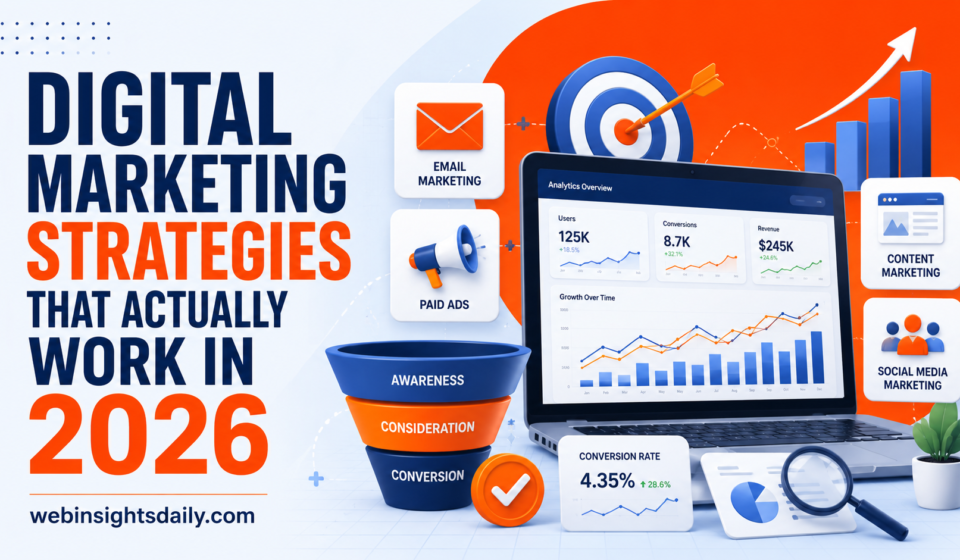
The digital marketing landscape is constantly evolving, with new platforms emerging, algorithms changing, and consumer behavior shifting. What worked wonderfully in 2023 might be ineffective in 2026. This guide explores proven strategies that are driving results right now, where successful companies are allocating budgets, and what approaches you should deprioritize.
Understanding the 2026 Digital Marketing Landscape
Before diving into specific strategies, it’s important to understand what’s changed:
Consumer Behavior Shifts:
- Privacy concerns influence platform choice
- AI-powered experiences are expected, not novel
- Video content dominates over static content
- Authenticity valued over polished perfection
- Personalization expected at every touchpoint
Platform Evolution:
- TikTok influences broader platform strategy
- LinkedIn becomes critical for B2B
- Email remains highest ROI channel
- Instagram refocuses on Reels over Feed
- Emerging platforms gain niche audiences
Technology Advancements:
- AI enables advanced personalization
- First-party data becomes precious
- Attribution models more sophisticated
- Automation handles routine tasks
- Privacy-respecting tracking methods evolve
Highest-ROI Digital Marketing Strategies in 2026
Email Marketing – The ROI Champion
Why It Dominates:
- $40-$50 ROI per $1 spent (highest of any channel)
- Direct access to audience (not dependent on algorithms)
- Highly personalized and targeted
- Easy to measure and optimize
- Combines well with other channels
What’s Working:
1. Segmentation & Personalization
- Segment audience by behavior, demographics, interests
- Send highly relevant content to each segment
- Personalize subject lines with names/preferences
- Improve open rates 25-50% through segmentation
- Increase conversion rates through relevance
2. Automated Workflows
- Welcome series for new subscribers
- Abandoned cart recovery
- Post-purchase follow-up
- Re-engagement campaigns
- Win-back sequences
Real-World Example: An e-commerce business segments newsletter into fashion enthusiasts, tech lovers, and home decor buyers. Fashion segment gets fashion recommendations 40%, tech segment gets tech 40%, and shared popular items 20%. Result: 35% higher engagement and 42% higher conversion compared to one-size-fits-all approach.
3. Email + Other Channels Integration
- Coordinate email with social media
- Retarget email non-openers on social
- Use email to drive web traffic
- Integrate SMS for time-sensitive offers
- Consistent messaging across channels
Implementation Priority: HIGH – Start email strategy immediately if you haven’t
Content Marketing – Quality Over Quantity
Why It Works:
- Builds authority and trust
- SEO benefits are substantial
- Attracts inbound leads
- Educates customers
- Drives repeat visits and engagement
What’s Working in 2026:
1. Long-Form, Authoritative Content
- 2,000-5,000 word pieces rank better
- Comprehensive guides outrank thin content
- Detailed explanations valued by Google
- Visitors stay longer on in-depth content
- Better for building authority
2. Topic Clusters & Pillar Content
- Create pillar pages on main topics
- Create detailed cluster articles supporting pillars
- Link cluster articles to pillar pages
- Google ranks comprehensive topic coverage better
- Improves overall domain authority
3. Original Research & Data
- Conduct surveys and publish findings
- Share proprietary data
- Become go-to source in your industry
- Generate backlinks from others citing research
- Distinguish from competitor content
4. Multimedia Content
- Videos embedded in articles increase engagement
- Infographics make complex data accessible
- Charts and graphs improve comprehension
- Audio/podcasts reach while commuting
- Mix formats for different learning styles
Content Production Strategy:
- Quality focus: Better to produce 4 excellent articles monthly than 10 mediocre ones
- Long-term value: Evergreen content provides value for years
- Keyword research: Build strategy around high-intent keywords
- Regular updates: Refresh high-performing older content
- Analytics-driven: Double down on what works for your audience
Implementation Priority: HIGH – Content compounds in value over time
Social Media Marketing – Platform-Specific Strategies
Why It Works:
- Builds community and brand loyalty
- Direct engagement with audience
- Drives website traffic
- Tests new products with feedback
- Generates user-generated content
Platform-Specific Strategies:
TikTok (High Growth Potential)
- Short-form video dominates
- Authenticity valued over perfection
- Trending sounds and formats important
- Posting frequency matters (3-5x daily optimal)
- High engagement rates compared to other platforms
Best for: Younger audiences, entertainment, lifestyle, trending content
Instagram (Established Audience)
- Reels now primary focus (replacing Feed)
- Video content outperforms static images
- Stories for engagement and authenticity
- Shopping features drive direct sales
- 1-2x daily optimal posting frequency
Best for: Visual-focused businesses, lifestyle, fashion, food, beauty
LinkedIn (B2B Focus)
- Professional content and thought leadership
- Company updates and hiring announcements
- Employee advocacy amplifies reach
- Video content increases engagement
- Groups create communities around topics
Best for: B2B companies, professional services, recruitment, industry insights
YouTube (Long-Form Video)
- Dominant video search platform
- Higher engagement than short-form
- Builds authority better
- YouTube SEO similar to Google
- Monetization opportunities
Best for: Tutorials, education, product reviews, industry analysis
Facebook (Mature Audience)
- Older demographic concentration
- Groups create engaged communities
- Ads remain highly targeted
- Local business promotion effective
- Event promotion and announcements
Best for: Local businesses, events, community building, older demographics
Paid Advertising – Strategic Targeting
Why It Works:
- Immediate visibility and traffic
- Precise targeting for efficiency
- Measurable ROI on ad spend
- Scales successful campaigns
- Fills gap while organic efforts mature
What’s Working:
1. Audience Targeting Evolution
- First-party data targeting (customer lists, website visitors)
- Interest and behavior targeting refined
- Contextual targeting (ads relevant to page content)
- Lookalike audiences (find new similar customers)
- Custom audience segments
2. Retargeting Sophistication
- Retarget website visitors across web
- Dynamic ads show specific products viewed
- Frequency capping prevents ad fatigue
- Sequential messaging builds narrative
- Cross-platform retargeting for coverage
3. Platform-Specific Ad Performance
Google Ads:
- Search ads still highest intent
- Shopping ads dominate e-commerce
- Performance Max campaigns simplify management
- Audience signals increase relevance
- Smart bidding strategies optimize automatically
Meta Ads (Facebook/Instagram):
- Highly visual ads perform best
- Video ads beat image ads
- Carousel ads increase engagement
- Retargeting highly effective
- Lead generation forms drive conversions
TikTok Ads:
- Native style ads blend with organic content
- Hashtag challenges drive engagement
- Longer-form video ads possible
- High engagement rates lower costs
- Young demographic accessibility
LinkedIn Ads:
- B2B targeting most sophisticated
- Lead generation forms effective
- Sponsored content reaches decision-makers
- InMail direct to inbox
- Retargeting to website visitors works
Budget Allocation Tip: Start with proven channels (Google Search, Facebook/Instagram). Test new platforms with 10-15% of budget. Scale what works.
Search Engine Optimization – The Changing Landscape
Why It Works:
- Organic traffic highest ROI long-term
- Compounds over time
- Not affected by algorithm changes (mostly)
- Builds authority and credibility
- Lower customer acquisition costs
What’s Working in 2026:
1. Core Web Vitals & User Experience
- Page speed critical for rankings
- Mobile experience essential (mobile-first indexing)
- Visual stability matters (CLS metric)
- Responsiveness important (INP metric)
- Page experience affects visibility
2. Content Quality & Relevance
- E-E-A-T principles more important (Expertise, Experience, Authoritativeness, Trustworthiness)
- Comprehensive content ranks better
- Original insights valued over regurgitation
- Content must match search intent
- Regular updates signal freshness
3. Link Building Evolution
- Quality over quantity critical
- Contextual links more valuable
- Relevant sites linking more important
- Building through content and outreach
- Broken link building still effective
4. Technical SEO Fundamentals
- Site architecture and crawlability
- Mobile responsiveness essential
- XML sitemaps and robots.txt
- Structured markup for rich results
- Canonicalization for duplicate content
SEO Strategy Steps:
- Keyword research: Find high-intent, manageable keywords
- Content creation: Write authoritative content addressing keywords
- On-page optimization: Optimize titles, meta descriptions, headings
- Technical SEO: Ensure site technical health
- Link building: Earn links through outreach and content
- Monitoring: Track rankings, traffic, and engagement
Emerging Channels Worth Exploring
Community Building – Discord & Slack Communities
Why It Matters:
- Creates loyal brand advocates
- Direct communication channel
- Feedback and insights about customers
- User-generated content and peer support
- Higher engagement than traditional social
Implementation:
- Create community around shared interests
- Foster peer-to-peer interaction
- Provide exclusive content and opportunities
- Build relationships with top community members
- Use insights to improve products/services
Conversational Marketing – Chatbots & Live Chat
Why It Works:
- Immediate response improves conversion
- Personalized engagement at scale
- 24/7 availability
- Qualified lead capture
- Data collection about customer needs
Implementation:
- Website chatbot for common questions
- Live chat for high-intent visitors
- WhatsApp business for direct communication
- SMS for time-sensitive offers
- AI-powered responses with human escalation
Strategies to Deprioritize or Eliminate
❌ Mass Email Blasts: Everyone to same list with same message = low engagement
❌ Keyword Stuffing: Hurts user experience and can trigger penalties
❌ Irrelevant Ads: Wastes money, damages brand reputation
❌ Ignoring Mobile: 60%+ traffic is mobile—can’t be afterthought
❌ Buying Email Lists: Leads to spam folder, damages reputation, wastes money
❌ Vanity Metrics: Focusing on followers/impressions instead of conversions
❌ Inconsistent Messaging: Confuses audience, weakens brand
Creating Your 2026 Digital Marketing Plan
Step 1: Audit Current Situation
- Which channels currently drive results?
- What’s ROI for each channel?
- Where are budget inefficiencies?
- What strategies underperform?
Step 2: Identify Priorities
- Email marketing (if not doing, start immediately)
- Content strategy (if weak, establish system)
- Paid advertising (if doing, optimize; if not, test)
- SEO (if weak, invest in improvement)
- Social media (pick 1-2 platforms to excel vs. mediocre presence everywhere)
Step 3: Allocate Budget
- Email marketing: 20-30% (highest ROI)
- Content creation: 25-35% (compounds over time)
- Paid advertising: 20-30% (fills organic gap)
- Tools and platforms: 10-15%
- Measurement and optimization: 5-10%
Step 4: Set Up Measurement
- Define success metrics for each channel
- Implement analytics properly
- Create monthly reporting dashboard
- Review performance monthly
- Optimize based on results
Conclusion: Focus on Fundamentals That Work
The digital marketing strategies working best in 2026 aren’t revolutionary—they’re fundamentals executed well. Email marketing, quality content, strategic paid advertising, and SEO still drive the highest returns. What’s changed is the execution: better targeting, AI-powered personalization, and strategic channel selection.
Key Takeaway: Successful digital marketing in 2026 focuses on proven channels (email, content, paid ads, SEO) executed with sophistication using AI and first-party data. Success comes from quality over quantity, personalization at scale, and measurement-driven optimization. Build a strategy around your specific business, measure everything, and continually improve based on data.